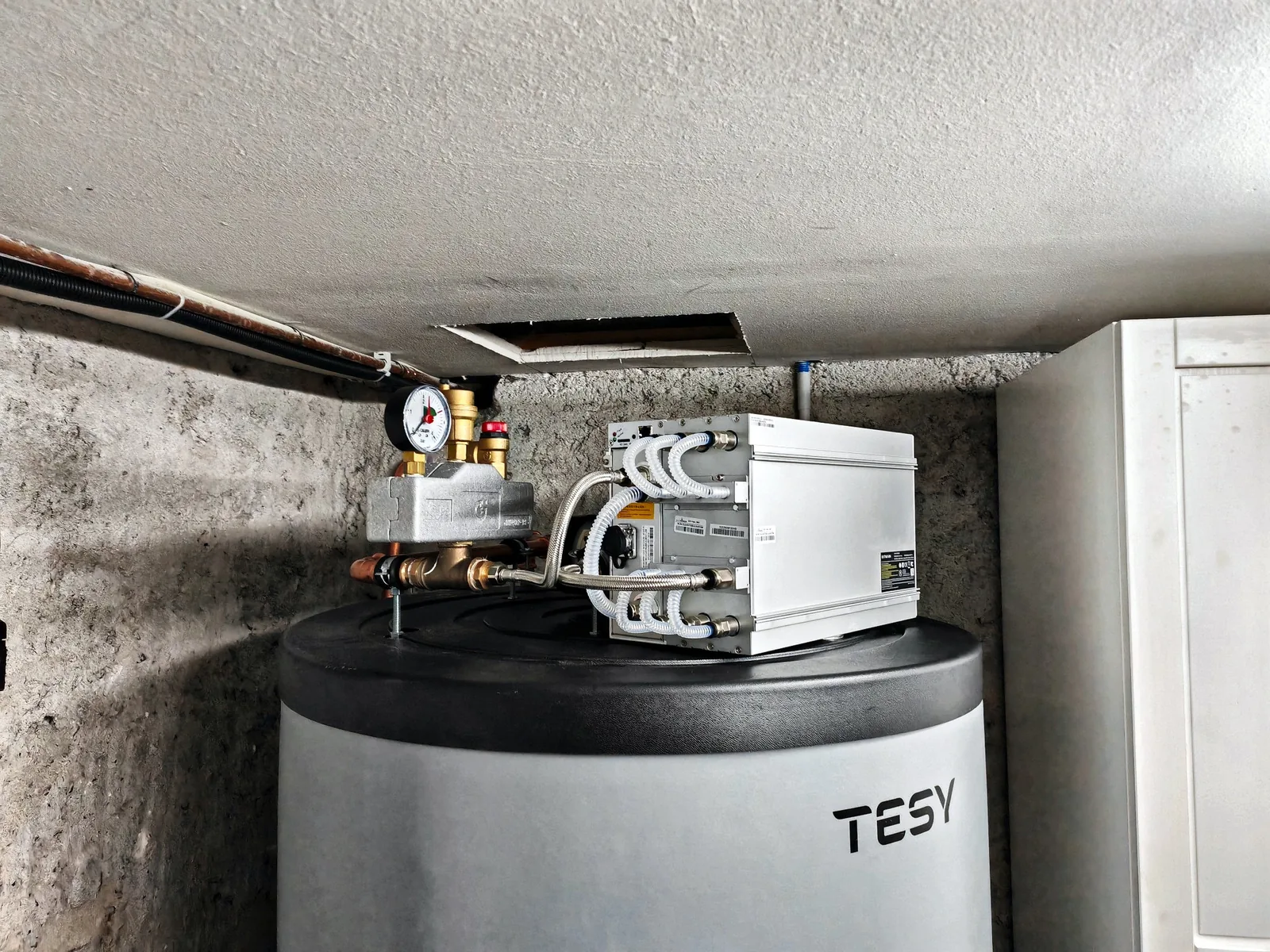
Understand the heating system
Review heat load, flow temperatures, distribution and building fabric.

Heat pump & heating
PHT coordinates the heat pump, hot water, thermal storage, solar PV and energy management.
Heat pump & heating
Review heat load, flow temperatures, distribution and building fabric.
Heat hot water and thermal storage during PV production.
Optimisation must not compromise hygiene, comfort or equipment life.
Integrate SG Ready, Modbus, relays or approved APIs correctly.
Process
Assess consumption, system and temperature requirements.
Combine PV forecast, tariff and thermal storage.
Connect sensors, storage, heat source and electrical control.
Review data and fine-tune after commissioning.
Heat pump & heating
Flexible for many loads, but limited by capacity and investment.
Hot water and the building mass can absorb surplus economically, but only for thermal use.
Good priorities prevent batteries and heat pumps creating unnecessary peaks.
Local SEO · GEO
A real project depends on the grid connection, current tariffs, shading, building services, permissions and measured demand. PHT combines these local facts with an integrated system design.
Frequently asked questions
Many have control contacts or interfaces, but the exact function and permissible operating limits must be checked for the model.
No. Capacity, heat loss, hygiene, space and actual demand need to match.
It depends on the season, heat demand, tariff, state of charge and objective. One fixed priority is rarely optimal.
Often yes, after checking hydraulics, controls and temperature levels.
Related content
Send heating information, electricity consumption and plant-room photos. PHT will assess operating and extension options.