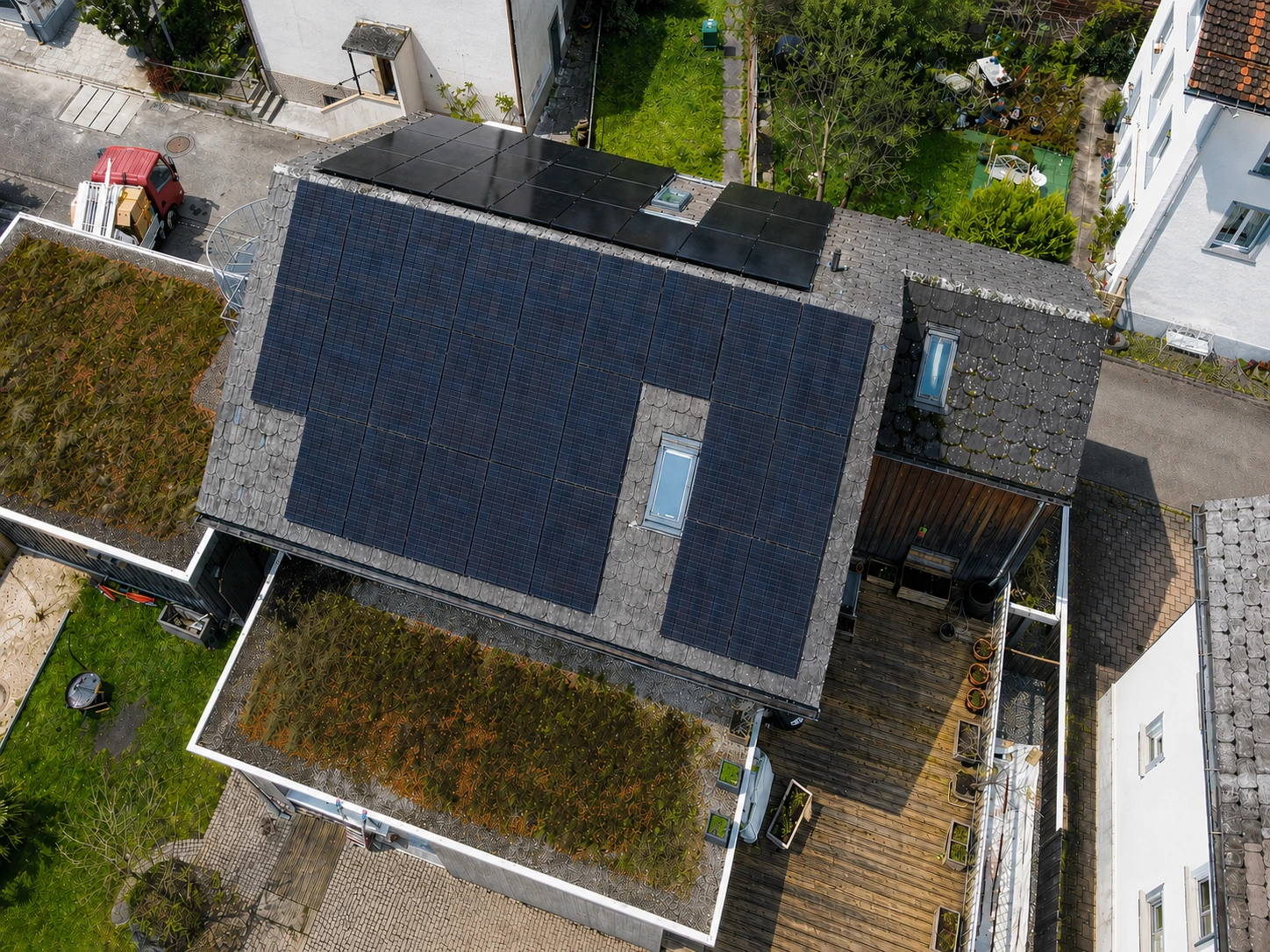
Use the roof well
Consider orientation, shading, structure, roof features and safe installation.

Solar PV
PHT plans module layout, inverter, protection, self-consumption and future extensions as one coordinated design.
Solar PV
Consider orientation, shading, structure, roof features and safe installation.
Select modules, inverter, protection and monitoring as a system.
Allow for batteries, heat pumps, hot water, EV charging and controls.
Coordinate grid application, metering, incentives and commissioning.
Process
Record the roof, consumption and technical baseline.
Calculate layout, yield, inverter and extension options.
Install mounting, modules, electrical equipment and protection.
Check metering, monitoring, documentation and controls.
Solar PV
Module efficiency, shading, grid capacity and demand determine the sensible size.
High annual production is valuable, but timing and use determine the financial result.
Spare cable routes, interfaces and plant-room space can simplify later storage or heat integration.
Local SEO · GEO
A real project depends on the grid connection, current tariffs, shading, building services, permissions and measured demand. PHT combines these local facts with an integrated system design.
Frequently asked questions
Often yes. It can produce over a longer part of the day and match household or business demand well. A specific shading and yield assessment is still required.
It depends on the roof, grid, electricity use, heat pump, EVs, storage concept and objectives. Sizing only to current household consumption is often too narrow.
No. Direct use, production timing, tariffs and other flexible loads should be assessed first.
Schemes change. PHT checks the conditions that apply when the project is prepared.
Related content
Send the address, annual consumption and roof photographs. PHT will assess layout, technical feasibility and useful next steps.